
Overview
This case highlights the potential of our proprietary technology, "BioTech," which utilizes bioaugmentation. One application of BioTech is composting, which transforms fermented sludge into fertilizer.
Our implementation at Chugoku Electric Power Co., Inc.'s second dam has demonstrated that our technology can convert sludge from the dam bottom into a fertilizer equivalent to conventional fertilizers that support plant growth.
This article outlines the process of converting sludge collected at dam bottoms into a safe and effective fertilizer for plants using composting technology, covering experimental methods and analysis results of the final product.
[See more about the technology]
Contents
・Overview of Application Scope
・Flow to Decision on Construction Method
・Construction Results Based on Sample Analysis
・Conclusion
Overview of Application Scope
The Mechanism of Pollution
Dams are continuously subjected to an influx of organic matter, such as dead leaves and wastewater. Under normal conditions, microorganisms decompose this matter. However, when the influx exceeds capacity and the balance of "Self-purification < Decay" collapses, the following problems occur:
- Chain Reaction of Water Quality Deterioration:
Anaerobic decomposition generates foul-smelling gases, while the release of nutrients leads to abnormal algal blooms. - Oxygen Deficiency and Sludge Accumulation:
Decomposition stagnates in the slow-moving bottom layers of the dam, leading to the accumulation of sludge.
The Bio Tech Solution Using our proprietary "Bio Tech" technology, we decompose and treat the accumulated sludge that is the root cause of water pollution. We have succeeded not merely in removing this sludge, but in recycling it into safe and effective fertilizer.
Flow to Decision on Construction Method
To effectively utilize our technology, we established an optimal composting process tailored to the target environment through a series of experiments. The key steps are as follows:
- We evaluated the decomposition characteristics of organic matter using dredged soil collected from the site and designed an appropriate decomposition system.
- Based on the results of the decomposition tests, we determined the optimal decomposition time and chemical additive amounts, which were experimentally verified.
- The effectiveness of the decomposition treatment was assessed through cultivation tests using young komatsuna plants.
Construction Results Based on Sample Analysis
To confirm whether the fermented product obtained from composting sludge from a Class II dam can promote plant growth as a fertilizer without causing harm, a seedling test using komatsuna (Brassica rapa var. perviridis) was conducted.
The test designated the sludge-derived fertilizer as "Test Fertilizer," with a bark fertilizer registered with the Governor of Iwate Prefecture as the "Control Fertilizer," and soil without fertilizer as the "Unfertilized Control (Inorganic Baseline)." Germination and growth status were compared.
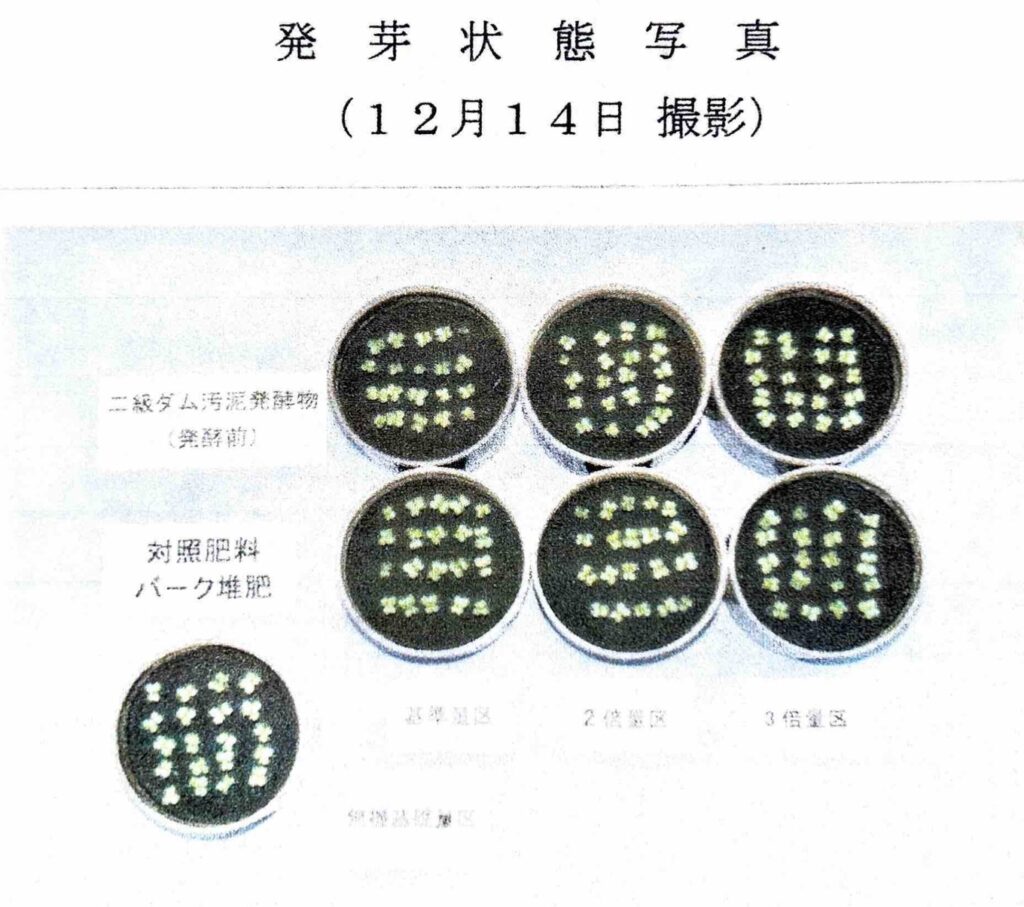
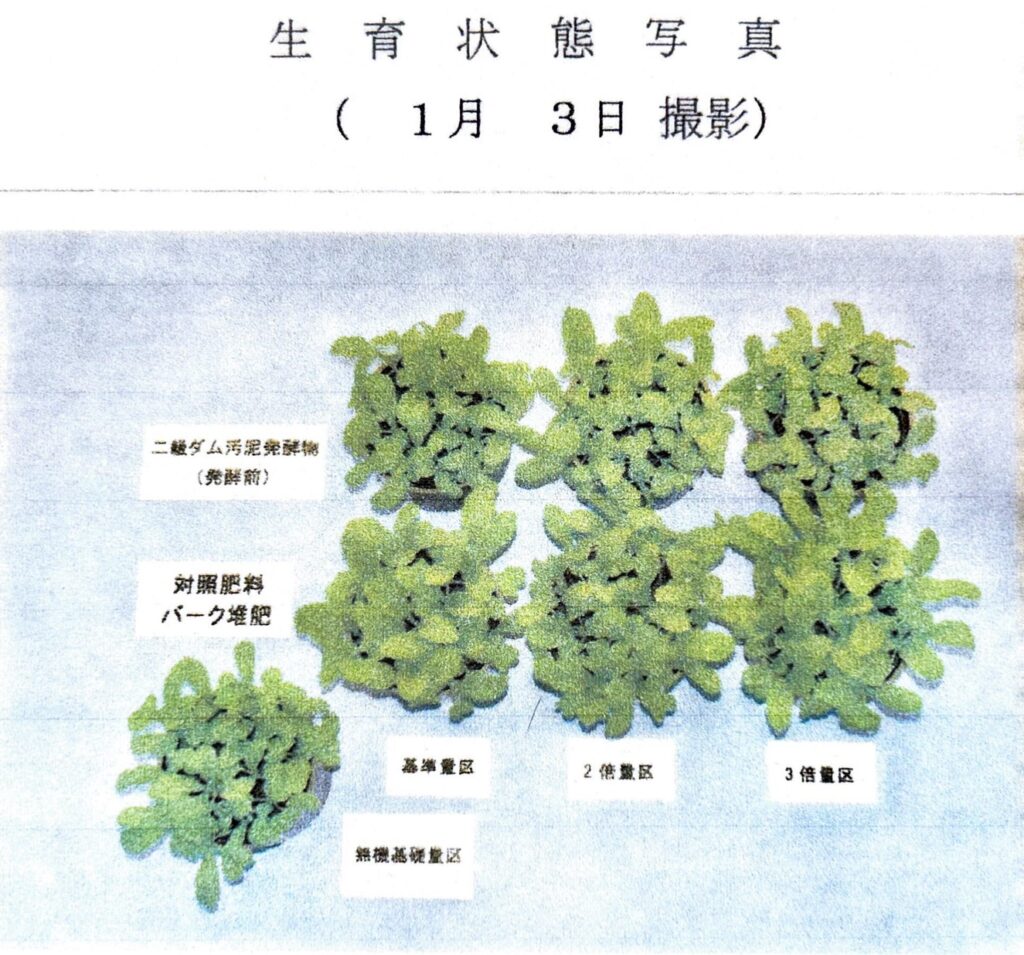
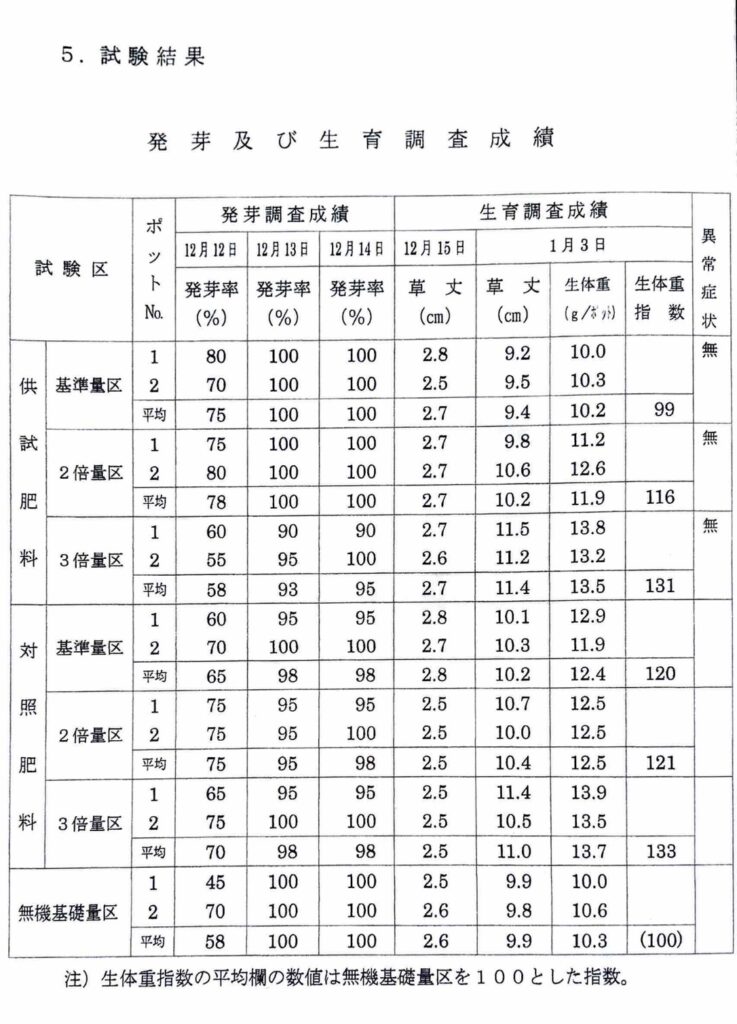
The results indicated similar trends in germination start time and rate between the Test Fertilizer and Control Fertilizer groups. In addition, growth increased with higher application rates in the Test Fertilizer group, achieving results comparable to or better than the Unfertilized Control and equivalent to the Control Fertilizer.
Conclusion
The results of the cultivation trials confirmed that the tested fertilizer plots were safe for plants and fully usable as fertilizer.
This achievement demonstrates that our technology can regenerate organic sediment accumulated at the bottom of dams into soil resources that can be used for agriculture.
This makes it possible to reuse waste generated from dam maintenance and management as a resource, and is expected to contribute to future sustainable environmental development and the formation of a resource-circulating society.